Etudes for Engineers

"What has been will be again,
what has been done will be done again;
There is nothing new under the sun.
Is there anything of which one can say,
"Look! This is something new?"
— Book of Ecclesiastes, 1:9
To invent something, you have to want it badly and think about it all the time. Not just want it, of course, but apply your mind to solving some problem, preferably a practical one, and better still one that falls within your job. Inventing for your own private satisfaction can weaken motivation, and besides, work itself is a distraction. The process of invention itself is enjoyable, even if it doesn't produce the desired result, and I feel a little sorry for people who, when faced with an unusual problem, do not try to solve it but instead soothe their imagination with biblical maxims like “There is nothing new under the sun” or “If it were possible, someone would already have done it,” before sitting down to watch television — or to read this essay.

The beauty of being an engineer is that you're constantly inventing something on the job. More precisely, you constantly encounter problems that theoretically can already be solved, but you don't know it, or simply don't want to open Perry's Handbook, much less go to the library and look up patents. Fortunately, I learned about patents at a fairly young age and acquired the habit of resisting the urge to invent everything myself. My first step, however cursory, was always to check whether someone else had already come up with the whistling kettle or the needle with the hole at the sharp end. Isaac Singer began making his sewing machines, and then along came a certain Elias Howe with a patent for a similar machine and needle, and Singer had to pay him royalties on every machine he sold.
I wrote about my first encounter with patenting in my story "Patent Expert." A couple of years after graduating, I found myself working as a freelance patent examiner, whose job was to check invention applications for novelty. After working through my first few dozen applications, I came to the conclusion that most inventors were dishonest, because in 80 percent of cases, I was able to find an existing prototype or essentially the same invention. The conclusion was completely wrong. At the time, I was simply unable to understand that for many people inventing is a passion, almost like an addiction, and that fame or money are secondary considerations. Few people are interested in wasting time searching for analogs in foreign patent files, which also need to be translated into Russian. Incidentally, computers didn't exist back then, and "files" were the cardboard folders with ribbons stored at the Institute of Patent Expertise in Moscow.

A little later, I came across Genrikh Altshuller’s book "The Algorithm of Invention", in which he set out a theory of inventive problem-solving that makes an essentially creative process, to a considerable extent, systematic. The main idea is to correctly formulate the problem, identify the internal antagonism, and then use known techniques to resolve it. For example, a tanker is transporting Libyan oil to the Odessa refinery and, on the return journey, must fill its tanks with water to maintain stability. In Tripoli, the water is dumped into the sea, polluting the environment. The solution is simple and elegant: a rubber membrane is installed in the hold, and oil is poured in on one side and water on the other. The liquids do not come into contact with each other, and the contradiction is resolved.

Often, a sought-after solution or suitable method already exists in another field of knowledge, and all that's needed is to apply it to specific conditions. An architect discovered that human bone is not solid but latticed internally, and used this structure in building construction, achieving maximum strength with minimal weight. It's worth noting that physicians had known this since the time of the first pharaohs, and, incidentally, the architect's name was Antoni Gaudí, and he incorporated his research into the structure of bones, branches, shells, and honeycombs into his design for the Sagrada Familia church in Barcelona. The further apart the fields of the problem and the source of the idea, the higher the level of the invention, its patentability, and the fame that comes with it.
As a chemical engineer, I've tried to apply Altshuller's theory of invention and methodology in my work, and, as a rule, with great success: if you look for it, it's fairly easy to spot a contradiction, but it's more difficult when there are several. Furthermore, according to the theory, a person "simmers" in alternatives and methods, sorting through them like puzzle pieces, but when the epiphany or flash of insight arrives, it always remains unknown and unexpected; apparently, you just have to want it harder. I've even come to the general, fundamental conclusion that if you really want something—a job, a position, a house by the ocean, a woman or a man, losing weight, learning to sing or play the guitar—it's bound to happen, and if not, it's because your desire wasn't strong enough. And the best part is that you do not even have to do anything. Just tell all your friends and acquaintances about your ambitions. But perhaps that is going too far, and now I want to offer you three stories of inventions from my engineering experience, which, it seems to me, well illustrate the above theory, and even if not, it's still nice to remember.
Chlorine purification
"I wanted to create in this backward country a chemical industry…»
- M. Novomeysky
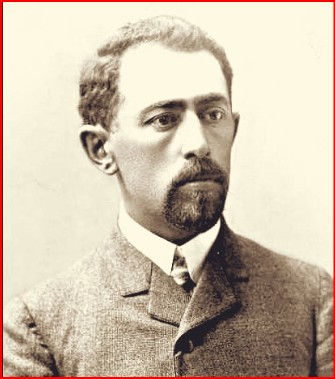
In the early twentieth century, Siberian gold miner Moses Novomeisky traveled to Palestine on a journey to holy sites. Arriving at the Dead Sea, he sampled the water and was struck by its high potassium content, which was already highly valuable as a mineral fertilizer. A chemist and entrepreneur, he applied to the Turkish authorities for a license to develop the deposit. However, World War I soon broke out, and Palestine came under the British Mandate. Negotiating the license with the British took Moses nearly ten years. In 1928, Novomeisky's enterprise produced its first kilogram of potassium, and the Dead Sea Works (DSW) company was founded, which he later donated to the State of Israel.
By the time I arrived in the historical homeland, the DSW was already extracting a host of other useful substances from seawater, not just potassium, but also bromine—an important chemical element whose production optimization was the focus of my efforts as the company's new engineer. To help readers understand the rest of this discussion, it's necessary to briefly explain what is contained in the Dead Sea water and in what form. Essentially, it's a brine with a very high concentration of several elements: the aforementioned potassium and bromine, as well as sodium, calcium, magnesium, and chlorine, all of which exist as ions—electrically charged particles. The mission of chemists and engineers is to isolate these elements either in pure form, like bromine, or as salts, such as the well-known sodium chloride, commonly known as table salt.

My task was to improve existing processes to reduce production costs or improve product quality. Specifically, a major project involved isolating ultra-pure bromine, requiring me to understand both the associated electrochemistry and the technology for extracting it from brine. Unfortunately, I didn't live to see Moshe Novomeisky, but a stone column made from granite slabs for bromine extraction, designed by his engineers, was still in place. At that time, there was no other material that could withstand the effects of this highly aggressive substance, but today, columns are made from special glass or metallic tantalum.
A request for a new process design came to our laboratory from a related group within a company attempting to extract chlorine for use in the production of polychloroethylene, a widely used plastic. A huge amount of this chlorine was being produced at a recently built magnesium plant, where metallic magnesium was obtained by electrolysis of magnesium chloride solution, and the chlorine was a waste product that needed some use.
MgCL2 + electricity = Mg ( metal) + CL2 ( gas)
I met with the plant’s chief engineer, Alex Gonionsky, who had emigrated from the Soviet Union about ten years before I did and had gone on to make a successful career for himself in the company. He had the overfamiliar manner — tinged with the superiority of the fully assimilated immigrant — and switched to Russian only reluctantly when I told him that I still did not speak Hebrew fluently.
- All right, kid, I’ll explain it in Russian. We make a hell of a lot of this chlorine, but it contains about one percent bromine impurity, and the polymer company is willing to pay only if the bromine content is below 0.05 percent. Clear?
- I see. We need to reduce the concentration by twenty times. Maybe we should try…
- No, dude, you don't need to invent anything. Everything's already been decided: we'll separate the bromine by distillation, that is, by distillation in a column. Your boss, Damir, told me that you're working with a special program called Aspen; plug the data into it and calculate the column size and temperatures. The capacity is ten tons of pure chlorine per hour.
- And the pressure in the column?
- Of course, it's atmospheric. The last thing I need is to mess around with the compressor. Can you handle it in a week? - And he left.

The next day, I tried calculating this separation. Bromine boils at 58 degrees Celsius, while chlorine converts to gas at minus 35 degrees Celsius. The temperature difference is large, so the column will need to be small. Not very high, that's good; three or four plates should be enough. I tried several calculation options and arrived at a column height of five meters and a diameter of one meter. A 90% purified chlorine yield is tolerable, but a cooling system for such a column, operating at minus 35 degrees Celsius at the time, would have cost half a million dollars, and Israel is warm in the summer. I wrote a report, attached a printout from the Aspen program, and gave it to Damir, who forwarded it to the magnesium plant.
A week passed, perhaps more, and I still could not get the problem out of my head. The whole distillation approach felt wrong somehow: first, you had to liquefy the chlorine gas, then evaporate it again, all at very low temperatures, and the equipment would be expensive. The entire process could be run at elevated pressure, which would keep all boiling points above freezing, but a compressor would be required, and that's also expensive, and the client has clearly stated they don't want one. And then I remembered a maxim: if a process has to be run at the edge of what is practical, it is usually a sign that you should be looking for a different process.
Here, too, distillation at low temperatures is, if not entirely exotic, then troublesome, and requires additional cooling efforts, preventing icing of pipelines and special materials. So, an alternative is needed: instead of distillation, try another method based on Altshuller's Theory of Inventions. - How to remove bromine impurity? – Maybe dissolve in something that does not dissolve chlorine, or react chemically?
A clue flashed through my mind — the sort of hook you need to snag an idea with. It reminded me of a Russian trawler in the Baltic that had lost its net and was dragging its anchor back and forth along the seabed in the hope of catching it. They did catch something in the end: a fiber-optic cable running from Sweden to Poland. It snapped, unfortunately. Their own fault, I suppose; they should have buried it deeper. I remember a year ago I had a project about producing calcium bromide, used for air dehydration, and it mentioned that this bromide ion reacts with elemental bromine to form a very stable, water-soluble compound—calcium tribromide:
CaBr2 + 2 Br2 => Ca(Br3 )2
- Warmer: we have bromine, but no calcium bromide. So, what do we have?
- Our company produces sodium and potassium bromides, but they are quite expensive, although you could try…
- What's cheap?
- Sodium and potassium chlorides. - I look in Karapetyants' reference book, yes, the same Mikhail Zakharovich with whom I took an exam on the structure of matter in my first year, and sure enough: bromine and chlorides also form stable triatomic ions [Br2CL-]. Eureka! - So, this way, bromine can be absorbed from gaseous chlorine by an aqueous solution of table salt NaCl.

I quickly launched my Aspen program on the computer. I need to calculate the absorption of bromine by a salt solution: we blow "dirty" chlorine gas into the column from the bottom, and pour brine on top, producing purified chlorine. Table salt is produced in enormous quantities at the nearby Dead Sea Works plant, naturally from seawater. Such an absorber requires no pressure, no cooling, and no heating! And the chlorine yield is almost 100%. Genrikh Altshuller would classify this invention as an IER – Ideal End Result, when the new system performs a function without complication, without expense, and without side effects.
I wrote a memo to Damir, attached the calculation, and he forwarded it to Gonionsky, and I returned to my current work. Alex and I never spoke again, and nothing was known about the fate of my invention, but a few years later, one of my friends working at the Magnesium Plant sent me a lab report describing experiments on the absorption of bromine from chlorine with a sodium chloride solution. It was a complete success: using just a 3 percent salt solution, the bromine content in the chlorine was reduced from 1 percent to 0.002 percent. If you recall, the target had been only 0.05 percent.
Encapsulation
"Chance favors only the prepared mind."
— Louis Pasteur
I worked at Novomer for four years. As happens with most startups, the grandiose plans to bombard the world with a new product—in our case, a super-absorbent used in diapers—and the clamor for "Disruptive Technology" ended in bankruptcy, layoffs, and the sale of equipment for scrap metal. This is, of course, unfortunate, but if you're interested, I've already written several essays on the inner workings of startups, their development phases, and the motivations of founders—read " Startup for Dummies " or " Pentaphase ."
This time, though, I want to talk about something better: that even in the shadiest organization, something like Enron, there are people who know nothing about management’s plans and simply do their work creatively. They ran experiments, built equipment, analyzed data, developed theories, and invented - sometimes remarkable things.
Using the example from the previous story with the trawler, we note that the sailors and junior officers knew nothing about the captain being tasked with severing this internet cable as part of the Cold War, and they did everything in their power to ensure that the network was found, the anchor scraped the seabed neatly, and the chain did not break.
Similarly, in startups, people below a certain level in the corporate hierarchy—read " Semiconductor Theory "—serve honestly and believe that the bonuses they receive as incentives will bring in millions once Novomer takes full control of the global diaper market. It won't.
It is worth noting that such naivety is usually a trait of the young, raised on the ideals of global warming, green energy, and diversity. Deceiving a sixty-year-old engineer is rather more difficult, especially one who comes from a country where socialism once triumphed.
- Tell me, Dima, did you know that it would all come to nothing—that all the steam would go to waste?
- Absolutely.
And still you did your work—and not casually, but creatively. Not merely because other jobs were hard to come by, or because you needed the money, though naturally you did, but because there is a deep pleasure in seeing things turn out as they should: in watching a theory confirmed, in discovering that your calculations were right. As Alexander Solzhenitsyn wrote of Ivan Denisovich — innocently convicted and sent to a labor camp — one might have expected him to hate the regime and turn out nothing but sloppy work:
"And—as if all thoughts had been swept from his head. Shukhov now remembered and cared about nothing but only thought about how he could make and install the pipe bends so that they wouldn't smoke."—and further in the text: "... But Shukhov is so stupidly made, and they can't break him off it; he regrets everything and every labor, lest they be wasted."

No, Ivan Denisovich wasn't churning out crap, and he wasn't simply laying cinder blocks while constructing the wall of yet another prison building. He was inventive and creative, steadily improving his productivity and the quality of his work. At the end of the workday, he became so engrossed in his work that he nearly missed roll call, risking a serious punishment. Yeah, so stupidly made…
I've also felt a new lease on life at Novomer: no matter what process or design calculations I'm doing for a new future plant in Turkey, Saudi Arabia, or South Africa, I'm constantly coming up with original solutions. Sometimes it's about seemingly minor things: I'm working on ethylene oxide from a safety standpoint, and the thought of purifying it from acetaldehyde impurities comes up. The membranes used for catalyst separation are clogging, and an idea arises about doing without membranes altogether, inventing a new catalyst regeneration process. But there's usually no time to test it, especially if the proposed innovation is even slightly outside the corporate paradigm: well, we'll buy already purified ethylene oxide at exorbitant prices, and the membranes are already on order; if they clog, we'll clean them.
I did file patent applications for some of these inventions and sent them to our patent department, but they had more important things to do, and I had no time to push them through. As the monkey says in the old joke, there was no time to think: the palm tree needed shaking. In other words, I had to keep inventing.
The most elegant invention of that period, to my mind, was encapsulation. If you do not know what that is, I will explain.
On the chemical path to diapers, we needed to obtain a certain polymer called PPL, the chemical formula of which I won't reveal to you: firstly, it's unimportant, and secondly, as my dad used to say, the first is enough. But I will tell you what polymers are made of—long molecules with repeating parts—from monomers, usually small molecules.
MPL (multiple monomers) + NAK (initiator) => PPL (polymer)
In our case, the monomer was called MPL, and it was a rather dangerous substance: toxic to all protein-based life forms and prone to explosion if handled carelessly. But it refused to polymerize "properly," requiring the addition of a so-called initiator—a substance called NAK.
The MPL polymerization reaction with this initiator proceeded very quickly: not like a nuclear reaction, but rather with a similar avalanche-like behavior: if you were a bit careless, the mixture would heat up, and the monomer would explode before it could fully react. Therefore, NAK—a white powder—was added in very small quantities and slowly.
While the experiments were being conducted in the lab, the amount of monomer was small—ten to fifteen grams—and the problem was simple: I picked up a grain of NAK with tweezers, dropped it into the flask, and stirred it with a wooden stick until it thickened. But in the pilot plant, when we needed to polymerize about a kilogram of MPL, the addition of 50 milligrams of initiator was not done all at once, but in five increments. And even then, it was terrifying, as the temperature in the well-cooled steel reactor rose to 130 degrees Celsius in one minute, and at 150 degrees, our monomer thermally decomposed, explosively, of course.
I'm not a very impressionable person, but I was tasked with calculating a 20-ton polymerization reactor for a plant being designed in Turkey. - How else are you going to flood the world with cheap diapers branded "Novomer-Super"? - You need scale. - But for some reason, I kept seeing this image before my eyes: on the lid of a huge iron barrel sits a small dispenser—a mechanism like a meat grinder with a screw-type conveyor, feeding a teaspoon of this powder into the reactor per minute. A huge, powerful stirrer rotates inside the reactor, but as the polymerization progresses, the mixture becomes more viscous, making it increasingly difficult to stir. NAK is a hygroscopic substance and can absorb water from the air, causing it to swell and form lumps.
At some point, the wet powder begins to stick to the dispenser screw, and the initiator doesn't enter the reactor at all. The reaction slows, the temperature drops, and the smart automation—everything at the plant of the future is automated—increases the flow of NAK. Then a large chunk from the dispenser finally falls into the reactor, failing to stir it; localized overheating occurs, the MPL monomer thermally decomposes, releasing gas, and bam! The reactor lid, along with the dispenser, flies all the way to the ancient city of Aleppo. We had a similar incident at the Dead Sea Works in Shop 630, when the mixer stopped, but I already wrote about that in " Notes of an Engineer "—everyone survived, and the boss got a promotion.
I've pushed the "small dispenser" problem into my subconscious—I have other things to do, too—let it simmer there, but I keep coming back to it. I've searched catalogs for dispensers for bulk solids—they exist, even very small ones, but they're for laboratory processes, while we'll need to build the setup outdoors. And they're terribly expensive: a 5-gram-per-minute dispenser will cost ten times as much as a 500-gram-per-minute one. It's always like that in chemistry—everything extreme is difficult and expensive: it's one thing to conduct a reaction at room temperature, but try doing it in liquid helium at two degrees Kelvin, or messing around with plasma at 100 million degrees Celsius.

In short, my method worked: relentlessly thinking and wanting—feeling the constant discomfort of an unresolved contradiction and being ready: holding the fishing rod in your hand and, when the fish bites, hooking right away. In the morning at breakfast, I take my medications and fish oil, vitamin D, as you call it, in those little yellow oval pills—capsules—and wash it down with water... Ding! There it is! The initiator needs to be encapsulated!
We immediately solve the problem of hygroscopicity – the capsule shell protects against moisture; we solve the problem of local concentration – the capsule falls into the reaction mixture and gradually dissolves there, meaning there is enough time to stir the initiator, and finally, we simplify the dosing problem: if we make capsules with a low MAK content, say 1%, then we will need to feed not 10 grams of powder, but 1000 grams of these capsules per minute, for which there are quite common industrial dosing machines.

-- Great? - Of course. And elegant! - And what will we make these capsules from? - Yes, from our own polymer, PPL. It will gradually dissolve in our monomer, and no foreign substances will appear in the reactor. What would Altshuller, the "enemy of the people," say after receiving 25 years in prison for anti-Soviet activities? I think, as in the previous case, he would classify this invention as an IER – an Ideal End Result, when the new system performs a function without complication, without expense, and without side effects. And encapsulation itself is a fairly simple and well-known process – just look in your medicine cabinet.
But this can only be guessed at; unfortunately, Genrikh Saulovich didn't live to see this invention for another twenty years. We do know, however, what Novomer's Vice President of Intellectual Property, Herbert Mu, had to say on the matter: "Look, Dimitri, tomorrow, our CEO and SFO and myself are flying to London, then straight to Johannesburg in Africa, and from there to Turkey, where our plant is planned for construction near Aleppo, but we shouldn't go there yet. On the way back, we'll stop by Calcutta—that's in India, where a large diaper market is shaping up—and then, via Amsterdam, home to Boston. You see, I don't have time to deal with this issue now; I'll come and have a look. In the meantime, you'd better get to work—I've got a ton of such inventions."
So I went, and while he was traveling, I emailed him a couple more patent applications; maybe he'll read them on the plane. And the gang actually went to Amsterdam for business: they set up a Novomer subsidiary there and siphoned off the remaining cash and intellectual property—all sorts of patents there… People are preparing for bankruptcy, and you're distracting them with nonsense about your reactor—a lunar tractor.
TMS vs. MTS
"My method is different.
I don't rush straight into practical work.
Once I have an idea, the first thing I do is
build it in your imagination."
- Nikola Tesla, "My Inventions", 1919
Meditronex is a serious company, not a startup. It makes a variety of medical equipment and generates billions in profits for its investors. They have dozens of facilities and research centers, and I worked as a consultant at a Meditronex plant in Minnesota that produces artificial heart valves. Initially, I investigated several industrial accidents—no fatalities, but rather unpleasant explosions in the plant's ventilation system. Even then, I was surprised by the insufficient documentation of operating procedures, so much so that I even considered writing in my conclusion that the incidents were caused by the operators' misunderstanding of the instructions, but I wisely refrained and limited myself to the chemical aspect of the issue. The working substance, let's call it MTS for now, under certain abnormal conditions, such as operator error, entered the plant's ventilation ducts, where it reacted violently with atmospheric moisture, causing an explosion and damage to them.

The consultant's expertise and political sensitivity were rewarded, and my next project with Meditronex involved increasing the productivity of the induction reactors used to manufacture these very same heart valves. Here, I must briefly explain the technology so that, as everyone has guessed, I can then present the inevitable invention for your consideration.
Artificial heart valves are rings, reminiscent of the thick wedding bands fashionable in the 1970s, with two semicircular petals attached to them. These petals can only open in one direction, the direction in which the blood, pumped by the heart, should flow. A person has four of these valves, and if one fails and you want to keep going, you can have an artificial one implanted. Cardiac surgeons perform approximately 300,000 such procedures worldwide each year, and the likelihood that you'll be implanted with a Minnesota-made valve is approximately 15-20%. I can't say for sure: firstly, I don't know, and secondly, the performance data is classified.

The first plastic heart valve was implanted in a patient in 1960, and the patient lived for another ten years. That outcome, however, was largely a matter of luck. In most cases, such implants failed much sooner because blood coagulated on the valve's surface, leading to the formation of clots.
Curiously, the problem of making valves thromboresistant was solved by the nuclear engineer Jack Bokros, who had previously worked on preparing nuclear fuel for power plants. Having come across an article by the cardiologist Vincent Gott on the search for suitable material for heart valves, Bokros suggested using a coating of so-called pyrolytic graphite, a material originally developed to protect uranium carbide fuel elements.
In 1968, after three years of experimental work, Gott began implanting the new valves in patients. They proved not only far less thrombogenic, but also exceptionally durable and resistant to wear.
Bokros's greatest achievement was the development of a special reactor for depositing graphite on parts. It was a vertical tube 4 inches (10 cm) in diameter, in which "rings and petals" tumble in a stream of hot gas, gradually building up a layer of carbon. "Where does this carbon come from?" you ask. "It comes from the well-known propane—a gas that decomposes into carbon and hydrogen in the reactor at 1300 degrees. "
C3H8 (propane) + 1300oC => 3 C (solid) + 4 H2 (gas)
It's important to note that this pyrolytic carbon coating is made even denser by adding a small amount of silicon. In addition to propane, Bokros also introduced into the reactor the same substance called MTS, which explodes upon contact with water, such as in Meditronex's ventilation ducts. MTS stands for methyl trichlorosilane, with the formula CH3CL3Si, where Si is the required silicon.
When I started working on increasing the reactor's performance, the first thing I did was request documentation regarding the plant's design. Before changing or improving something, it's always good to ask why they did it the way they did: a temperature of 1300 degrees instead of 1400 degrees, a diameter of four inches instead of ten, and so on. And I got almost nothing from Meditronex: the plant had been operating for thirty years, and for some reason, the necessary documentation was missing. I learned on LinkedIn that Jack Bockros was alive and suggested I ask him these questions personally, but Meditronex's management didn't approve of the idea—I learned why a little later. It turns out that, having mastered the pyrolytic coating of valves, Bokros founded his own company, Carbomedic, and built this very plant in Minneapolis, which was later acquired by Meditronex, after which the inventor himself was fired. And they didn't think it necessary to ask for design documentation: we make valves—the money comes in!
I had to search for research articles in old journals, look at patents from the 1960s, and little by little, I began to understand something. Honestly, I'd never heard of this Chemical Vapor Deposition technology before, but there are plenty of consultants, and I'm eager to work—I'll take on almost anything.

But you can't read everything in books, so Isaac and Lina, the young plant engineers, and I built a model reactor out of transparent plexiglass to see how these parts rotate inside the airflow, at room temperature for now. The specifications call for loading 14 substrates at a time, but why not 21? Let's increase productivity by half, and maybe we won't even have to pay the consultant anymore. We tried adding one piece—everything seemed fine—then we threw in a second one and… the levitation mode was disrupted, and all the rings fell to the bottom of the tube.
No, Bokros and his colleagues knew their stuff: no more, no less. I tried to simulate the process's hydrodynamics on a computer: the reactor's bottom is shaped like an inverted cone, air enters through a hole at the bottom, and its velocity decreases proportionally to the square of the height. But what if the bottom were parabolic? Calculations show that in this case, the velocity would change linearly, meaning more smoothly.
We ordered the necessary part, assembled the unit, and launched it with 14 preforms—all fine. Then we started adding parts one at a time: 15, 16, 17, but after the 18th, they all sank to the bottom—fluidization collapse had occurred. Nevertheless, productivity can be increased by 20%, and the shape of the reactor bottom doesn't make much difference.
I wrote a report on the invention and sent it to Meditronex's chief engineer. Genrikh Altshuller would have been pleased, but Jeff, not so much: "We need to double the plant's productivity at least," he says. "The company has valve orders for three years in advance, and you're talking about 20%."
Frankly, he's right: the expected impact of any proposal must be significant, and an improvement of less than 30% will likely be worthless in practice, and any anticipated profit will be lost during implementation: loading more parts means supplying more air, and our compressor is at its limit, meaning we need to buy a new one, replace the piping, and so on—basically, we need to play big. Fine, I say, we'll have to make the reactors themselves larger. I started doing the calculations while Lina and Isaac modified the lab setup: increasing the diameter from 4 to 6 inches and ordering a more powerful air compressor.
I'm modeling a new, larger-diameter reactor—there are 16 of them at the plant—calculating various parameters and creating a material balance. Consequently, more water will be used for cooling, more electricity for heating, and the reagent consumption needs to be increased, both for propane, the carbon source, and for MTS, the silicon. When MTS decomposes, it produces, in addition to silicon, another carbon atom and three molecules of hydrogen chloride gas (HCL).
CH3CL3Si (MTS) + 1300oC => Si + C + 3 HCL (gas)

Since this HCL gas is toxic and cannot be released into the atmosphere, it is absorbed with an alkaline solution and neutralized in a special apparatus called a scrubber. As we increase capacity, the old scrubber must be replaced with a new, larger one.
I arrive in Minneapolis for a meeting, reporting on the project status and the need for a new scrubber—another five million. Then the safety director specifically informs me that this hydrogen chloride has already "eaten through" all the ventilation ducts—it's highly corrosive. Recently, there was a leak in the workshop—they barely had time to evacuate people; a commission arrived and almost shut down the plant altogether. Everyone present was silent for a moment, and then the chief engineer suggested that in the new design, the reactor exhaust, containing hydrogen chloride, should not be sent into the general ventilation system at all, but instead install a small scrubber near each reactor.
- I wonder, - I say, - is there room for them in the workshop? After all, the new reactors will be larger than the old ones anyway.
- There's no room,- replies Jeff, - and it's cramped now, but you're a consultant, so think of something.
I'm back at the hotel, sitting and thinking, as I promised, but other than simply building a new plant, as they say in America, "in a greenfield," that is, from scratch, nothing comes to mind. Maybe I should apply Altshuller's "Theory of Invention" and look for where the contradiction lies?
- We want to increase productivity, but there's no room for equipment.
- And why not?
- Because hydrogen chloride can't be released into the ventilation, and it's also impossible to fit multiple small scrubbers in the workshop.
- Maybe there's another way to capture it?
- No, it seems neutralizing the acid with alkali is the simplest and cheapest method; my father did it, and my grandfather, and my great-grandfather - they were all chemical engineers.
Okay, I thought I'd identified the paradox, like "small lobsters cost three dollars, and big ones cost five." Now I need to digress and encapsulate the problem, that is, incubate it in the subconscious, and... I turned on the TV. At the time, there was the Covid epidemic, about a year into its onset, right at the height of vaccination efforts. I watched some irresponsible blogger-journalist explain how, in Italy, they tried to estimate the need for oxygen machines, conducted a statistical analysis, and came up with a strange result: the more of these machines a hospital had, the higher the mortality rate. A specialist immediately appeared who interpreted this from a medical perspective, something about hyperoxia, lung tissue damage...
And a strange thought came to me, as I wrote above: a fish has bitten! Or maybe the anchor got caught on the gas pipeline?
- If these oxygen machines are not needed, then maybe we should throw out some of the excess?
- Get rid of a scrubber?
- No, it catches hydrogen chloride.
- But maybe we don't need to introduce methyl trichlorosilane: after all, chlorine gets into the system with it?
- No, silicon improves the density of the graphite coating; Bokros won't approve.
- Hold the line, boy, don't let go, take up the slack, or the fish will get away.
- We don't need chlorine – it is only a by-product! And it comes into our system along with the MTS, which produces silicon during decomposition! – That was the invention! We need a source of silicon that doesn't contain chlorine!
- Does such a thing exist?
- Of course, there are. There are other silanes—silicon compounds. And we need to look for a substance with properties similar to MTS, at least a liquid one. I go online—Artificial Intelligence didn't exist back then—and find a compound called TMS—Tetramethylsilane—liquid at room temperature, practically non-reactive with water, making it less hazardous than MTS. And it doesn't contain chlorine, meaning it won't release hydrogen chloride during decomposition. Moreover, it turns out that this TMS is widely used in other areas of technology where silicon deposition is required. The question arises: why didn't Bokros use TMS? We checked: in those early days, such a silane wasn't produced, and the only available source of silicon was chlorinated MTS.
Si (CH3)4 + 1300oC = Si + 4 C + 6 H2 (gas)

I have to catch a flight in the morning, but I changed my ticket to an evening plane and am flying straight to the chief engineer.
- Jeff, I have an idea to eliminate chlorine from the process altogether, and scrubbers won't be needed, and there will be nothing to corrode. - He's a practical man—he understood everything right away.
- How much does your TMS cost, and where can we get it? - He called the young engineer with whom we did the experiments.
- Calculate the material balance, Isaac. How much will it cost us?
We come back from lunch, and Isaac has the calculations ready: TMS is made in Germany, and in terms of silicon, it's twice as expensive as MTS, but we save a lot on propane, since TMS has four carbon atoms, while MTS only has one. Overall, the cost of consumables or raw materials will only increase by a few percent, but the savings on capital expenditures are colossal – scrubbers are not needed, and there should be enough space in the old workshop – we won't need a new building. And production safety is also a big concern – there will be no more hydrogen chloride in the process.
We agreed that Jeff would report to management and schedule test runs with the TMS in one of the existing reactors, and Isaac would conduct them, and I would go home to work on the 6-inch reactor.
Three months passed. The heart valves for the experiments had been purchased, and I was preparing to fly to Minneapolis. Then, without warning, I received a letter from Jeff: postpone the trip; Isaac and Lina had resigned, and the project was in trouble.
I called Isaac, and it turned out that history was repeating itself. Meditronex was planning to sell its heart-valve plant to another company. Engineers were being laid off, projects were being shut down, and Isaac had already found another job. I wished him luck and sent Meditronex my invoice for the consulting work.
Of course, I was disappointed that such a beautiful invention was never put to use. But I remembered Hemingway's The Old Man and the Sea: yes, the giant marlin was torn apart by sharks, and its flesh would never be sold at thirty cents a pound. Still, Santiago had caught it — and that was victory enough.

© Dimus 2026


Comments